
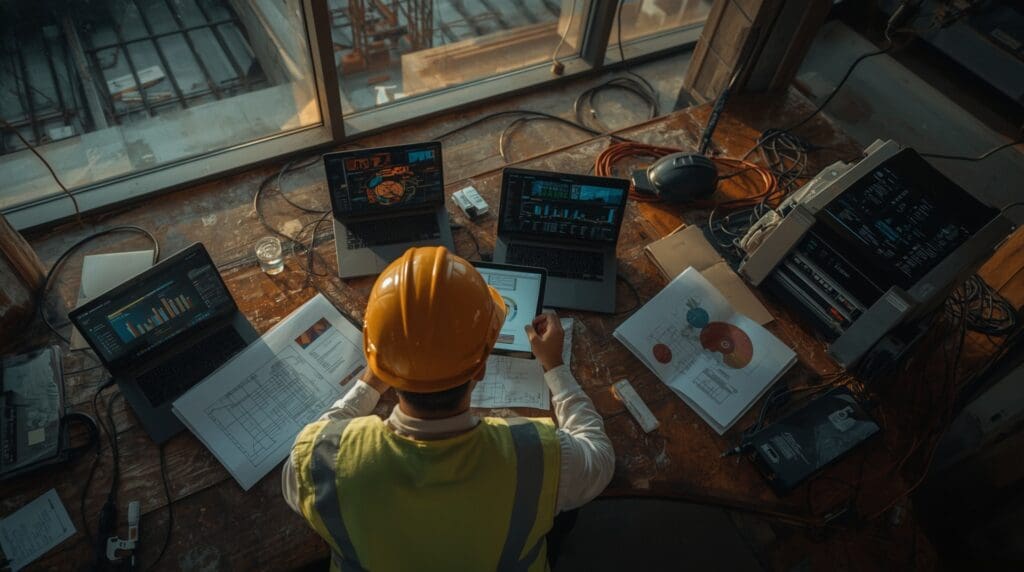
Construction companies run on tight deadlines, distributed teams, and technology that has to work in the field and the office at the same time. When your IT fails, projects stall, bids get delayed, and your crew loses time you can never get back. Managed IT services for construction companies give you a dedicated team that keeps your systems running, your data protected, and your field technology management under control, without the cost of hiring a full in-house IT department.
Whether you run a small residential contractor in Raleigh or a large commercial builder operating across multiple job sites, the right construction IT support strategy makes a measurable difference. This guide breaks down the core tools, services, and decisions you need to get your technology working as hard as your crew does.
Ready to learn more? Explore how AltaTech delivers managed IT services built for businesses in Raleigh and beyond.
What Managed IT Services Actually Mean for Construction
Managed IT services means outsourcing your technology support to a third-party provider, called a managed service provider or MSP. The MSP handles monitoring, maintenance, security, and helpdesk support for a predictable monthly fee. You get enterprise-grade IT without building an internal team from scratch.
For construction companies, this model fits especially well. Your technology needs shift with each project phase. An MSP scales with you, adding resources during busy seasons and pulling back when things slow down. You pay for what you need, not what you might need someday.
The Biggest IT Challenges Construction Companies Face
Construction is not a typical office environment. Your team works across job sites, trailers, remote offices, and the road. That creates IT problems most standard support plans are not designed to solve.
Common pain points include:
- Unreliable connectivity at job sites where wired internet is not available
- Data loss risk from devices damaged, lost, or stolen on site
- Software compatibility issues between estimating, project management, and accounting platforms
- Cybersecurity exposure from employees using personal devices or unsecured networks
- Slow response times when an in-house IT person is unavailable or overwhelmed
Addressing these challenges requires a support model built around the construction workflow, not a generic small-business IT plan.
Field Technology Management and Site Connectivity
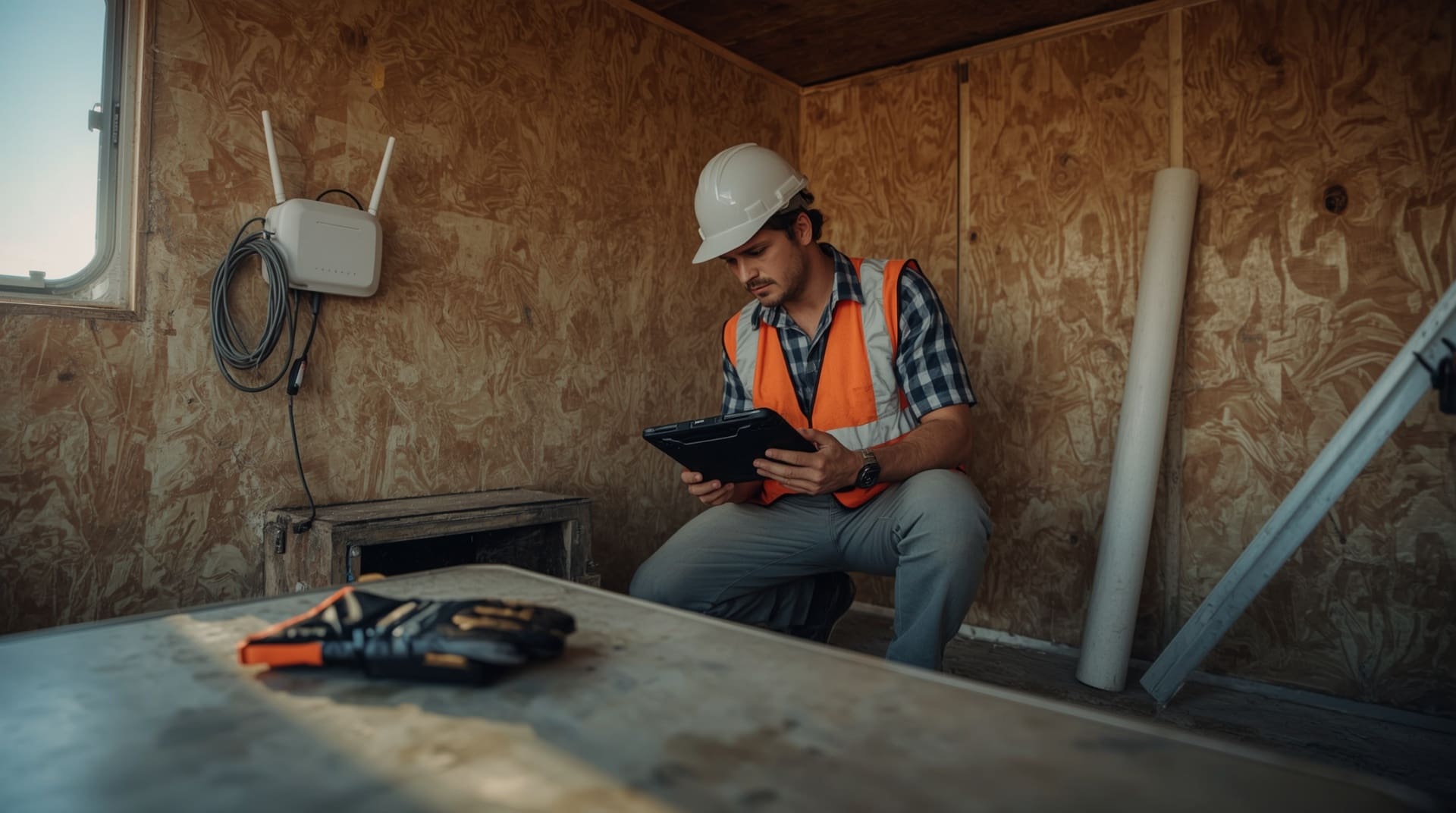
Field technology management refers to the practice of keeping hardware, software, and connections operational at job sites and in the field. This includes tablets, rugged laptops, mobile devices, and any connected equipment your crews use day to day.
Strong field support covers three key areas:
1. Mobile Device Management
Mobile device management, or MDM, lets your IT provider push updates, enforce security policies, and remotely wipe lost or stolen devices. This protects project data even when hardware leaves your control.
2. Temporary and Portable Network Setup
Job sites often need internet access before permanent connections are available. An MSP can configure cellular-based routers, bonded connections, or temporary LAN setups so your crew stays connected from day one.
3. Remote Monitoring and Support
Remote monitoring means your MSP watches your systems 24 hours a day. If a server goes offline, a backup fails, or a device starts behaving strangely, your provider is alerted and can respond before the issue becomes a full outage.
Core Services in a Construction IT Support Plan
A well-built construction IT support plan bundles several services into one monthly agreement. Each service solves a specific operational problem your team faces in the field or the office.
| Service | What It Does | Why It Matters for Construction |
|---|---|---|
| Helpdesk Support | Live troubleshooting via phone, chat, or remote session | Gets field crews back to work fast |
| Network Management | Monitors and maintains all wired and wireless connections | Keeps office and site networks stable |
| Managed Backup and Recovery | Automatically backs up files and restores them after a failure | Protects bids, drawings, and contracts |
| Cybersecurity | Blocks threats and monitors for breaches | Defends against ransomware and data theft |
| Cloud Services | Hosts files, apps, and communication tools online | Gives field teams real-time access from anywhere |
| VoIP Phone Systems | Delivers voice calls over the internet | Connects office and job site teams reliably |
Cybersecurity Risks Construction Companies Cannot Ignore
Construction firms are a growing target for cybercriminals. You hold sensitive financial data, project contracts, client information, and subcontractor records. A successful attack can freeze operations and cost you far more than any IT investment.
The most common threats in this industry include ransomware, phishing emails targeting accounts payable staff, and business email compromise scams. These attacks often succeed because construction teams are busy and not focused on security hygiene.
A managed IT provider layers your defenses with endpoint protection, email filtering, multi-factor authentication, and continuous monitoring. You do not have to become a security expert. You just need a partner who already is one.
How Cloud Tools Support the Construction Workflow
Cloud services, meaning software and storage hosted on remote servers rather than on-site hardware, are a natural fit for construction. Your team can access blueprints, RFIs, submittals, and schedules from any device with a connection.
An MSP helps you select, deploy, and manage cloud platforms that match how you work. This includes project management tools, cloud-hosted accounting software, and shared document libraries. Proper cloud setup also reduces your dependence on a single office location, which matters when a storm or other event forces your office to close.
Cloud services also simplify collaboration with architects, engineers, and owners. Everyone works from the same version of a file, reducing costly errors caused by outdated documents.
Managed IT Services for Small and Mid-Size Construction Firms
You do not need to be a large general contractor to benefit from managed IT. Small and mid-size construction firms often gain the most value because they lack the budget for full-time internal IT staff but face the same threats and technology demands as larger companies.
Outsourced IT gives smaller firms access to a full team of specialists including network engineers, security analysts, and helpdesk technicians. That team costs a fraction of what it would take to hire those roles individually. The predictable monthly fee also makes budgeting easier, which matters for companies managing thin project margins.
Choosing the Right Managed IT Partner for Your Construction Business
Not every MSP understands construction. The right partner should have experience supporting field-heavy operations and a clear process for handling both office and job-site technology.
Before signing any agreement, ask these questions:
1. Do They Understand Construction Software?
Your MSP should be familiar with the platforms your team uses, such as project management, estimating, and accounting tools common in the industry. If they have never supported those systems, expect a steep learning curve.
2. What Does Their Response Time Look Like?
Field crews cannot wait hours for a resolution. Ask for guaranteed response time commitments in writing. Most quality MSPs offer response times measured in minutes for critical issues, not hours.
3. How Do They Handle Multi-Site Support?
If you run multiple job sites at once, confirm the MSP can support all of them. Ask specifically how they handle connectivity issues at temporary locations and whether they offer on-site visits when remote support is not enough.
Final Thoughts on Managed IT Services for Construction Companies
Technology is no longer optional in construction. It drives project efficiency, protects your data, connects your team, and keeps your business competitive. Managed IT services for construction companies give you the expertise and infrastructure to run your technology like a larger firm, at a cost that fits your budget.
The right construction IT support partner does more than fix problems. They prevent them, plan ahead with you, and make sure your field technology management keeps pace with your growth. If your current IT situation feels reactive and scattered, a managed IT provider is the straightforward fix.
Frequently Asked Questions About Managed IT Services for Construction Companies
What is included in managed IT services for construction companies?
Most plans include helpdesk support, network monitoring, managed backup and recovery, cybersecurity, cloud management, and sometimes VoIP phone systems. The specific services depend on your provider and your company’s size. A good MSP will assess your current setup and recommend a plan tailored to construction operations.
How much do managed IT services cost for a construction firm?
Pricing typically ranges from a flat monthly fee per user or per device. Costs vary based on the number of users, the complexity of your environment, and which services are included. Most small to mid-size construction firms find managed IT is more affordable than hiring even one full-time IT staff member.
Can managed IT support job sites without permanent internet connections?
Yes. Experienced MSPs can configure cellular-based routers, bonded connections, and secure mobile hotspot setups for temporary job sites. They can also manage mobile devices used by your field crew so those devices stay secure and functional throughout the project.
How does managed IT protect my construction company from cyberattacks?
Your MSP deploys multiple layers of protection including endpoint security software, email filtering, multi-factor authentication, and 24/7 monitoring. If a threat is detected, your provider responds immediately. Regular security training and patching schedules also reduce the risk of a successful attack in the first place.
Do I need managed IT if I already have one in-house IT person?
Many construction companies use a co-managed IT model, where an MSP works alongside your internal person. This gives your in-house staff backup coverage, specialized expertise for complex issues, and after-hours support. It also reduces burnout and single points of failure when your IT person is unavailable.